NSW plantation futures
Stronger government and industry collaboration sought.
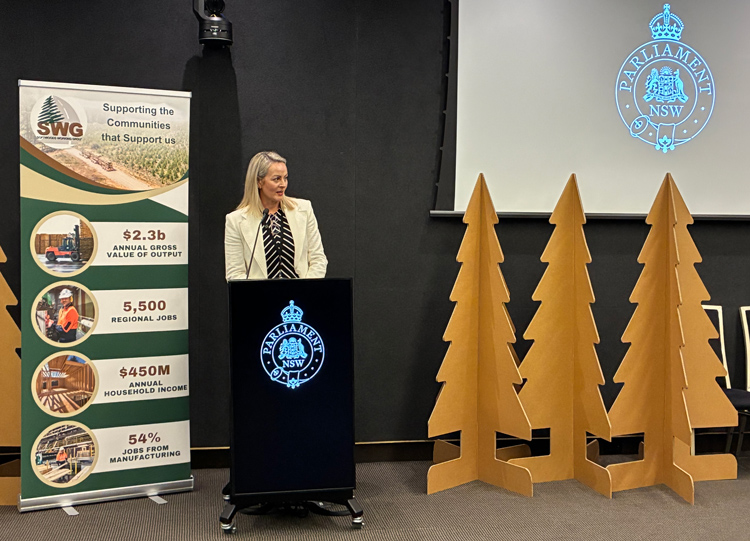
Carlie Porteous, general manager of the SWG, speaking at the event.
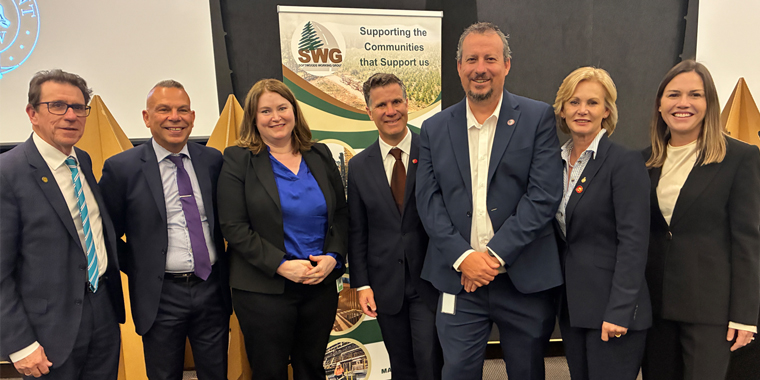
MAIN PIC: Political attendees at the SWG parliamentary networking event. From left, Dr Joe McGirr MP, Mark Buttigieg MLC, Minister Tara Moriarty, Justin Clancy MP, Mark Banasiak MLC, Nichole Overall MLC and Emily Suvaal MLC. All images: SWG
Last week, the Softwoods Working Group (SWG) brought together Members of Parliament, industry leaders and regional stakeholders at NSW Parliament House to discuss the future of plantation timber investment, regional jobs and the long-term sustainability of one of NSW’s most important manufacturing industries.
Held in the Preston Stanley Room under the theme ‘Supporting the Communities that Support Us: A Roadmap for Future Plantation Timber Investment’, the parliamentary networking event provided an opportunity to highlight the economic and social contribution of the softwood timber industry and the practical actions needed to secure its future.
The event featured contributions from Dr Joe McGirr MP, Minister Tara Moriarty, Minister Jenny Aitchison, Justin Clancy MP and SWG chairperson Dean Anderson, with discussions focused on plantation expansion, infrastructure investment, fire protection, regional manufacturing and reducing barriers to private investment.
SWG general manager Carlie Porteous said the event reinforced the importance of bringing government and industry together to deliver practical solutions for regional NSW: “Our plantation timber industry is fundamental to the economic strength of our regional communities, supporting local jobs, manufacturing businesses and the supply of timber products essential to building Australian homes.
“However, securing the industry’s future requires more than recognising its contribution. We need practical policy settings that encourage plantation expansion, reduce investment barriers and provide the confidence needed for businesses to invest and grow.
“This event was about having meaningful conversations with decision-makers and demonstrating how targeted government action, supported by industry expertise, can deliver lasting benefits for regional NSW,” Porteous concluded.
A key focus of the discussions was the need to address barriers that continue to constrain plantation investment, including bushfire risk, invasive weeds, regulatory complexity and infrastructure limitations.
The SWG highlighted opportunities for a more coordinated approach to plantation development, including exploring Strategic Plantation Economic Zones, which could bring together suitable land, infrastructure planning, investment incentives and targeted risk-reduction measures.
The event also provided an opportunity to highlight the industry’s contribution to housing supply and the importance of maintaining a strong domestic timber manufacturing sector.
SWG Chairperson Dean Anderson said long-term investment certainty was critical to ensuring the industry could continue supporting regional communities and meeting Australia’s future timber needs.
“The softwood industry has demonstrated its resilience and commitment to regional NSW, particularly following the devastating 2019–20 bushfires,” Anderson said. “Our industry is ready to invest, innovate and grow, but we need government to work alongside us to create the conditions that make future investment possible.
“Growing our plantation estate, protecting existing resources and supporting regional manufacturing are essential if we want to maintain jobs, strengthen sovereign timber supply and ensure our communities continue to thrive.
“The message is simple: supporting the timber industry means supporting the communities that depend on it.”
The parliamentary event formed part of SWG’s broader advocacy efforts to strengthen engagement with government and promote practical, evidence-based solutions to the challenges facing the NSW plantation timber sector.
Porteous said continued collaboration would be essential to translating discussions into meaningful outcomes.
“We appreciate the willingness of parliamentarians, government representatives and industry stakeholders to engage in these important conversations,” she said.
“Our focus now is on building on that engagement and working together to turn opportunities into action, ensuring the plantation timber industry remains a strong contributor to regional prosperity for generations to come.”